Mandore and Marwar History
If you are planning a Rajasthan trip and want more than palaces and photo stops, Mandore gives you a stronger sense of the region’s political and cultural past. This guide is for travellers who want to understand how Marwar rose, why Mandore mattered before Jodhpur became the centre of power, and how you can explore the area comfortably in a half-day or full-day outing.
Mandore is one of those places where Rajasthan’s history feels close and layered. You will find old cenotaphs, ruined temples, gardens, and stories of the Rathores, all within easy reach of Jodhpur. If you enjoy heritage sites, local legends, and practical travel planning, this article will help you make sense of Mandore and the wider Marwar story.
Why Mandore Matters in Marwar History
Before Jodhpur rose to prominence, Mandore served as an important political centre in Marwar. It was associated with earlier rulers of the region, and later became linked with the Rathore dynasty, who eventually shifted their capital to Jodhpur in the 15th century. That shift changed the shape of the region, but Mandore remained important as a place of memory, ritual, and royal commemoration.
Marwar, broadly the western Rajasthan region around Jodhpur, has long been known for its strategic trade routes, warrior clans, desert ecology, and resilient settlements. Mandore sits close enough to modern Jodhpur that you can visit it easily, yet the site feels distinct because it preserves traces of older power centres and funerary architecture. For many travellers, that makes it one of the best places to understand Rajasthan beyond the usual palace circuit.
A Short History of Mandore and the Rathores
Mandore’s historical importance predates the establishment of Jodhpur. Over time, the region came under different powers, and local legends are woven tightly into the official history. The Rathores, who became the dominant ruling family of Marwar, are central to Mandore’s story. Their relocation of the capital to Jodhpur did not erase Mandore’s role; instead, the old capital became a sacred and commemorative landscape.
One of the reasons Mandore continues to attract visitors is the way history appears in layers. You see temple fragments, memorials for rulers, and garden spaces that were created much later but preserve the prestige of the site. The cenotaphs of Marwar rulers are especially significant. They represent royal remembrance in a style that is very different from the forts and palaces most travellers first associate with Rajasthan.
As you walk through Mandore, you are effectively moving through a chapter of Marwar’s transition: from older centres of power to the rise of Jodhpur, and then to a landscape where memory and heritage became just as important as administration.
What to See in Mandore
Mandore Gardens and the Cenotaphs
The Mandore Gardens are the most visited part of the area. They are known for the cenotaphs, or chhatris, built for the rulers of Marwar. These stone memorials stand out for their carved pillars, domed roofs, and the dignified setting around them. The design is elegant without being excessive, and it gives you a good sense of how royal memorial architecture developed in western Rajasthan.
Spend time here slowly. Early morning or late afternoon is best if you want softer light and fewer crowds. The area is usually manageable as a one- to two-hour visit, though history lovers may stay longer.
Temples and Older Ruins
Mandore also has remnants of older religious structures and temple architecture. Some parts are in ruins, while others have been restored or preserved in a limited way. You may come across shrines linked to local deities and ancestral worship traditions that are important in Marwar culture. This is one reason the site feels more complex than a regular garden or memorial park.
If you are interested in architecture, look closely at the stone work, pillars, and the way different periods seem to sit alongside each other. It is less about one dramatic monument and more about a historical landscape.
Hall of Heroes and Local Memory
The Hall of Heroes is another well-known part of the Mandore complex. It reflects local devotion to figures remembered for bravery and service. While the presentation may feel more interpretive than archaeological, it still helps explain how Marwar’s identity has been shaped by heroism, loyalty, and royal memory. For travellers, this is useful because it connects the site to living cultural ideas, not just old dates.
How to Plan Your Visit from Jodhpur
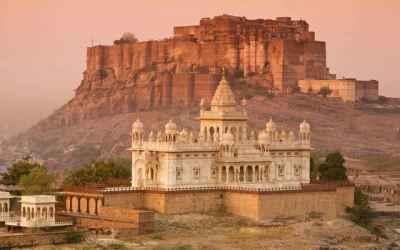
Mandore is convenient for travellers based in Jodhpur. The distance from central Jodhpur to Mandore is roughly 9-12 km depending on where you start, and the drive usually takes about 20-30 minutes. That makes it easy to include Mandore in a larger day of sightseeing that may also include Mehrangarh Fort, Jaswant Thada, or the old city.
You can visit Mandore as:
- A half-day trip if you only want the gardens, cenotaphs, and a relaxed walk.
- A combined heritage day with Jodhpur fort sites.
- A cultural stop if you are driving through Marwar and want a history break before continuing onward.
For most travellers, the best months are October to March, when daytime temperatures are more comfortable. Summers in Rajasthan can be very hot, so if you visit from April to June, go early in the morning and carry water. Monsoon months can be pleasant, but always check local weather and site conditions before you go.
Best Way to Experience the Site
Mandore is not a place to rush through. You will enjoy it more if you treat it as a slow heritage walk. Start with the main cenotaph area, then explore the surrounding structures and memorial spaces. If you are travelling with family, children often enjoy the open garden setting more than a formal museum-style site.
If you are a history-focused traveller, read up a little on Marwar before arriving. The visit becomes richer when you already know that Mandore was once politically significant and later became a commemorative centre. Even a basic understanding of the Rathores and the move to Jodhpur helps the site make more sense.
Photography is usually straightforward here, but do remember that this is a heritage and memorial site, not just a scenic park. Dress comfortably but respectfully. Good walking shoes help, especially if you want to move around different parts of the complex without tiring quickly.
Food, Local Transport, and Nearby Add-Ons
Since Mandore is close to Jodhpur, most travellers eat in the city rather than at the site itself. In Jodhpur, a simple meal at a casual restaurant may cost around ?250-?500 per person, while a fuller Rajasthani meal can go to ?600-?1,200 depending on the place. If you want to try local flavours, look for dal baati churma, gatte ki sabzi, ker sangri, and mirchi vada while you are in town.
Transport is simple. A local taxi or app-based cab from central Jodhpur to Mandore may cost around ?300-?700 one way, depending on the exact pickup point, waiting time, and season. Auto-rickshaws may be cheaper for short hops, but confirm the fare before starting. If you are on a guided Rajasthan tour, Mandore can often be added without much extra effort because it sits so close to the main city circuit.
Nearby add-ons worth considering include Mehrangarh Fort, Jaswant Thada, the blue lanes of the old city, and Mandore itself as a morning outing. If you have more than a day in Jodhpur, that combination gives you a much fuller sense of Marwar’s political and cultural history.
Suggested Itinerary for a One-Day Heritage Visit
If you want a practical plan, this works well:
- 8:00-9:30 am: Start at Mandore Gardens and cenotaphs while the weather is cooler.
- 9:30-10:30 am: Explore the surrounding memorial and temple areas at a slower pace.
- 11:00 am onward: Return to Jodhpur for Mehrangarh Fort or a city walk.
- Lunch: Stop for a Rajasthani or Marwari meal in the city.
If you have only a short window, Mandore still works well as a compact heritage stop. If you have longer, pair it with the city’s fort and stepwell experiences to better understand the transition from old capitals to modern Jodhpur.
Useful Travel Tips Before You Go
- Confirm opening hours before visiting, especially on holidays or festival days.
- Carry water from October to June, as the climate is often dry and hot.
- Start early to avoid strong sunlight and mid-day crowds.
- Wear modest, comfortable clothing suitable for walking around a heritage site.
- Keep small cash handy for entry fees, parking, snacks, or local transport, since these can vary.
- Respect the memorial character of the site; it is both a tourist stop and a place of historical memory.
Entry fees, parking charges, and site timings can change, so it is always wise to verify the latest details before booking your trip. If you are travelling during festivals, school holidays, or major Rajasthan tourism events, expect slightly more footfall than usual.
Frequently Asked Questions
Is Mandore worth visiting if I have already seen Mehrangarh Fort?
Yes, because Mandore gives you a different angle on Marwar history. Mehrangarh shows royal power at its peak, while Mandore helps you understand the older political centre and the memorial traditions of the Rathores. Together, they give you a fuller picture of Jodhpur’s past.
How much time do I need for Mandore?
A basic visit takes around 1.5 to 2.5 hours. If you enjoy history, photography, or slow walks, set aside half a day so you do not feel rushed. That also gives you flexibility if you want to combine it with Jodhpur’s other heritage sites.
Can Mandore be visited with children or older travellers?
Yes, the site is generally suitable for both. The open layout makes it easier than some hill forts, though you should still expect some walking. Carry water, choose a cooler time of day, and plan breaks if needed.
What is the best season to explore Mandore?
October to March is usually the most comfortable period. The weather is cooler, and outdoor heritage visits feel much easier. Summer afternoons can be harsh, so if you must travel then, go very early and avoid the hottest hours.
Is Mandore only about royal cenotaphs?
No, it is broader than that. Along with cenotaphs, you will find temple remains, memorial spaces, and a landscape tied to older religious and political traditions. That mix is what makes Mandore especially interesting for travellers who want the deeper story of Marwar.
Should I hire a guide at Mandore?
If you enjoy historical context, a guide can be useful. Some details are easier to understand when someone explains the Rathore connection, the move to Jodhpur, and the meaning of the memorial architecture. If you prefer exploring independently, a little pre-reading will still make the visit rewarding.
Mandore is one of Rajasthan’s most useful heritage stops because it helps you connect the dots between ancient capital, royal memory, and the rise of Jodhpur. If you are building a Rajasthan itinerary with depth, not just sightseeing, this is a place that deserves time. Plan it well, visit in good weather, and you will leave with a much clearer sense of Marwar’s history.
If this guide helped you plan better, share it with someone who is mapping out a Rajasthan trip.
Disclaimer : The information provided in this blog is for general informational purposes only. While we strive to keep the content accurate and updated, TravelSetu assumes no liability for errors or omissions. If you believe any part of this blog infringes your rights or causes concern, please notify us immediately at info[at]travelsetu[dot]com so that appropriate action can be taken.