Russian Orthodox Cathedral (Cathedrale SaintNicolas) (Nice) History
History of Russian Orthodox Cathedral (Cathédrale Saint-Nicolas) in Nice, France
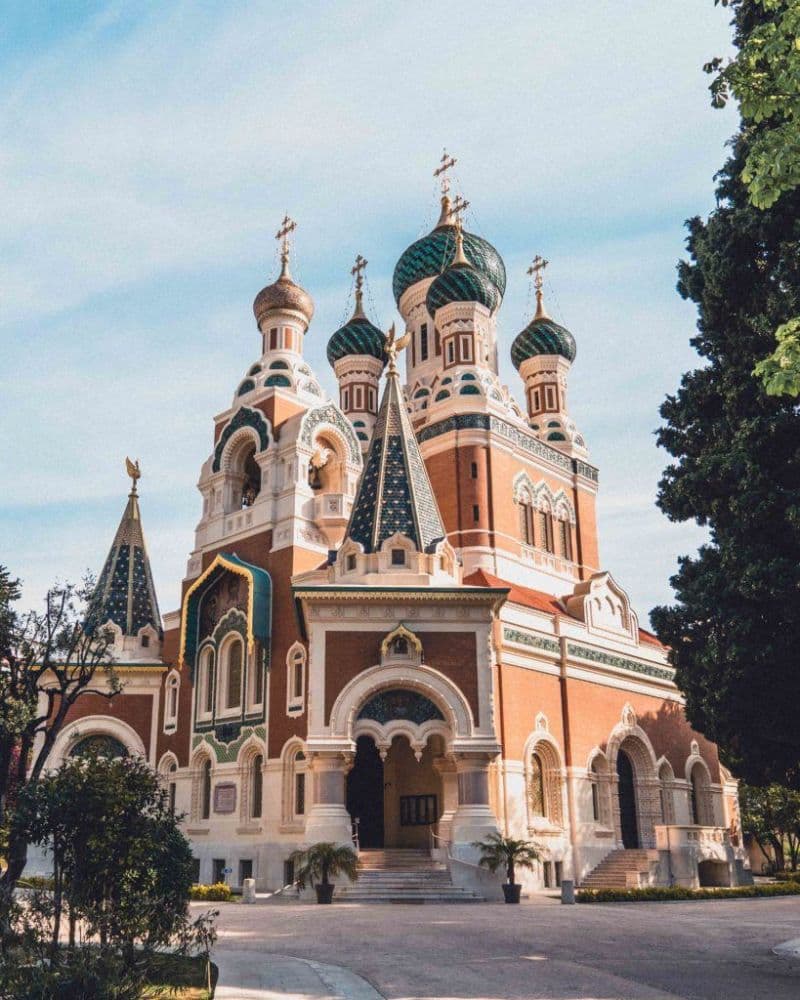
The Russian Orthodox Cathedral, also known as Cathédrale Saint-Nicolas, is one of Nice’s most striking and significant landmarks. Its construction began in 1903 and was completed in 1912, intended to serve the large Russian community that had settled in Nice by the end of the 19th century. The cathedral was built on the place where the eldest son of Emperor Alexander II, Tsarevich Nicholas Alexandrovich, who had died in Nice, was once commemorated with a chapel.
It is the largest Eastern Orthodox cathedral in Western Europe and has been recognized as a national monument by the French government since 1987. The cathedral's architecture is a showcase of the historic Russian religious art form and is replete with beautiful icons, frescoes, and woodwork, which have been meticulously restored over the years.
Tourism History of Cathédrale Saint-Nicolas
The cathedral has been a pivotal tourist attraction since its consecration. Initially a focal point for the Russian nobility wintering on the French Riviera, it later became a curiosity for international visitors post-World War II as travel became more accessible.
Throughout the 20th century, the cathedral's allure grew as it was not just a religious site but also a symbol of Franco-Russian history and art. The increasing global interest in cultural and architectural tourism helped boost its popularity.
After the collapse of the Soviet Union, the cathedral experienced a resurgence in interest, which coincided with the boom in cultural heritage tourism. Travelers from around the world, including many from Russia rediscovering their pre-communist heritage, have made it a must-visit site in Nice.
Latest Tourism Trends for Cathédrale Saint-Nicolas
In recent years, tourism at Cathédrale Saint-Nicolas has been influenced by the following trends:
- Sustainable tourism: Efforts have been made to ensure that the increase in visitor numbers does not adversely affect the cathedral’s historical integrity.
- Digitalization: The use of virtual tours and augmented reality apps allows visitors to explore the cathedral's history in a more interactive way.
- Educational Tourism: There has been a rise in visitors seeking educational experiences, leading to the cathedral offering more structured tours that delve into its history and architecture.
- Religious pilgrimage: As a functioning religious site, it continues to attract pilgrims from around the world who come to worship and partake in the cathedral’s liturgical life.
To conclude, the Russian Orthodox Cathedral in Nice stands today not only as an active religious site but also as a testament to the rich cultural exchange between Russia and France, preserved in stone and fresco. It is a site of historical and architectural significance that continues to attract a diverse array of visitors year-round.
Other Places to Visit in Nice
View all places to visit in Nice


Explore Places to Visit Near Russian Orthodox Cathedral (Cathedrale SaintNicolas) by Type


Other Suggested Reads for Russian Orthodox Cathedral (Cathedrale SaintNicolas)
- About Russian Orthodox Cathedral (Cathedrale SaintNicolas) Tourism
- Things to do in Russian Orthodox Cathedral (Cathedrale SaintNicolas)
- How to Reach Russian Orthodox Cathedral (Cathedrale SaintNicolas)
- Best time to Visit Russian Orthodox Cathedral (Cathedrale SaintNicolas)
- Food in Russian Orthodox Cathedral (Cathedrale SaintNicolas)
- FAQs about Russian Orthodox Cathedral (Cathedrale SaintNicolas)
- Russian Orthodox Cathedral (Cathedrale SaintNicolas) Tourist Map