Independence Palace Tourism
Historical Landmark4.0(10,355 reviews)
About Independence Palace
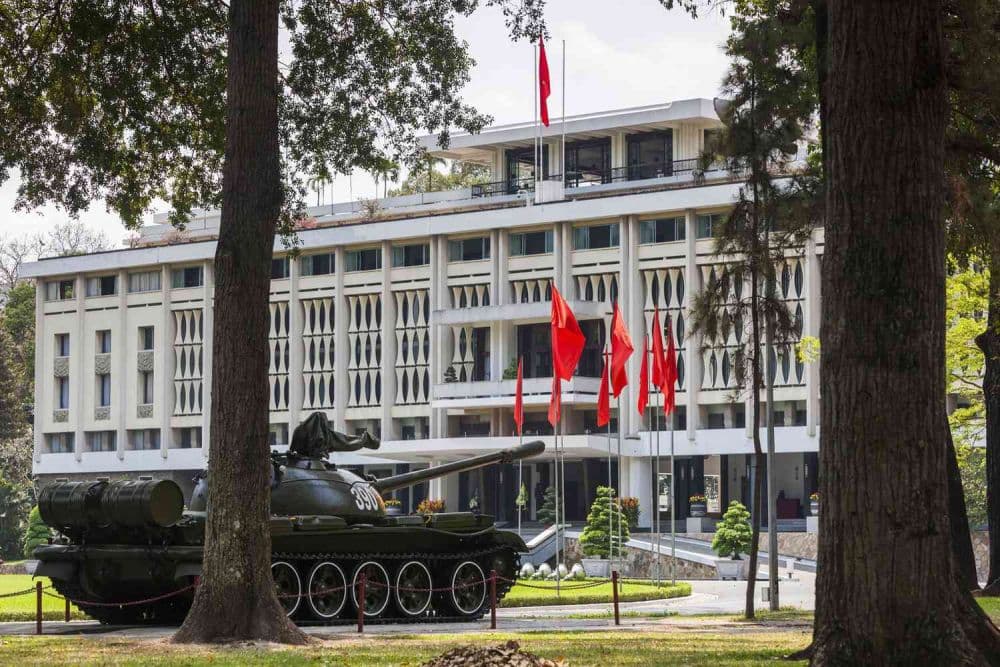
Independence Palace, also known as Reunification Palace, located in Ho Chi Minh City, is an iconic landmark and a symbol of Vietnam's national history. The site originally housed the French Governor-General of Indochina's residence but was dramatically replaced by the current structure, which served as the presidential home and workplace during the Vietnam War. The palace became internationally famous when a North Vietnamese Army tank crashed through its gates, effectively ending the war on April 30, 1975. Designed by architect Ngô Viết Thụ, Independence Palace is a striking example of 1960s modernist architecture, incorporating traditional Vietnamese elements. The palace has five levels, including a basement with war rooms and telecommunications center, the war command room, where the South’s leaders managed their side of the conflict, a grand hall, the president’s living quarters, and rooftop terrace. Today, it is preserved almost as it was in the 1970s, serving as a museum that offers a glimpse into the historic life of the political elite during turbulent times. The well-kept grounds and lush gardens that surround the palace are as much a part of the attraction as the building itself.
Top 5 Reviews on Independence Palace
L8074RKjohnh
5.0Wrote on 11 Jul 2024
Palace visit
been many times but never dissapoints. A real slice of Vietnamese history and you can do it solo or with a tour guide. Gaurds always ready to answer questions and a must see for Saigon