krishna292
★★★★4.0Wrote on 27 May 2023
A Memorial to The Topmost Woman Freedom Fighter of India
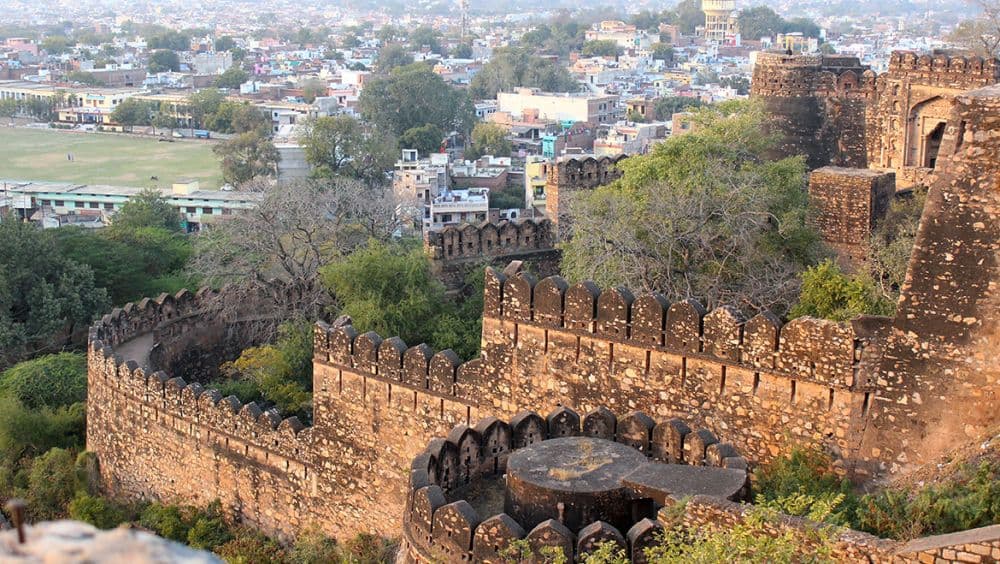
After completing our visit to Orchha we visited Jhansi Fort, which is just 18km away and on our way to the Jhansi station (now named as Veerangana Lakshmibai Station) after the queen of Jhansi. As our train for Delhi was to leave at 3-30 PM, we had enough time to visit Jhansi. I have been craving to visit the Jhansi fort since my early school days, when I read the poem written by famous Indian poet, Subhadra Kumari Chauhan on the struggle by Jhansi Ki Rani (queen of Jhansi) to save her kingdom from the clutches of the British forces and had also seen a movie (Jhansi ki Rani), based on her life. Historically, the fort is reported to have been constructed by the ruler of Orchha kingdom, Veer Singh Deo Bundela in 1613. When Moghul Commander attacked Orchha in 1728, Maharaja Chhatrasal of Orchha requested the Maratha ruler Bajirao Peshwa for help and after defeating the Moghul army, he gifted the Jhansi fort, a part of his kingdom to Peshwa. Peshwa appointed a subedar for the day to day governance of Jhansi and in the course of time many subedars ruled Jhansi till 1838, when the subedar was given the title of King by the East India company Governor General. During 1850s, the then British rulers wanted to annex Jhansi on the death of then Jhansi King and did not accept the adopted son as the king, his mother, Lakshmibai challenged and fought bravely tiening her son on her back till her death. Till this date her brave fight, sacrifice and injustice by the Britishers is remembered by all Indians. The fort extends to an area of about 15 acres, relatively a small fort and has many gates. The palaces and other structures inside the fort have no murals like Orchha palaces. It has a Lord Shiva Temple where the queen used to worship daily, living palace for the queen. The most important sites are the canyon used for firing on the British army and the jumping stone to mark the place from where the queen jumped on her horse back with her son tied on her back and escaped. these are shown in the attached photos.
mshailendra_123
★★★★★5.0Wrote on 25 Mar 2023
Historical fort
Jhansi fort is situated at the heart of jhanshi...I visited two times this fort...It's a historical place. It's show our history, culture, sculpture and pride. It's a great experience to see all over jhansi from the top of the fort...
AAB-PNE
★★★★★5.0Wrote on 17 Jan 2023
Jhansi Fort or Jhansi ka Kila
Jhansi Fort or Jhansi ka Kila is a fortress situated on a large hilltop in center of Jhansi city and was at the centre of India’s first war of Independence and also for Rani Laxmibai – queen of Jhansi. It is easily accessible by car/auto-Tuk-Tuk and the rest of the fort can be explored on foot very easily. It is a well maintained fort open from sunrise to sunset. There are sufficient signage's all over the fort with a map at the entrance which can be referred. Main highlights to see in the fort are 1. Kadak Bijli Cannon 2. Ganapati Mandir 3. Bhavani Cannon 4. Spot from where Rani Laxmi Bai jumped from the ramparts of the fort on horseback, along with her son, evading capture from British forces. It can be explored in about 3 hours. View of city from the fort ramparts is magnificent.
smamgain
★★★★★5.0Wrote on 12 Jun 2022
Amazing Experience to an important and proud milestone of our country’s independence struggle
Amazing experience. The place has been cleaned up recently and looks good. The laser show has also restarted. A must visit for anyone coming to Jhansi for the first time. The guides are trained. This is an important chapter of our history. And just needs 60-90 minutes. Don’t miss the evening sunset
sayantanjana
★★★★★5.0Wrote on 25 Feb 2022
A magical experience which can teleport one back to the days during 1857...
We had an excellent experience at the Jhansi fort. It is easily accessible by car, and the rest of the fort can be explored on foot very easily. We were able to hire a guide for Rs. 300, who helped us explain the most significant part of the fort and it's relevance to Indian history. Jhansi fort was at the centre of India's first war of independence in 1857. And it is a magical feeling to walk the same ramparts which had once witnessed many bloody skirmishes. And to walk the pathways once walked by its legendary queen (Rani Lakshmibai) just added the cherry on top. All in all it can be explored fully within 2-3 hours time. The view of the city from the ramparts is also magnificent.