Temple of Heaven Tourism
Cultural4.5(12,204 reviews)
About Temple of Heaven
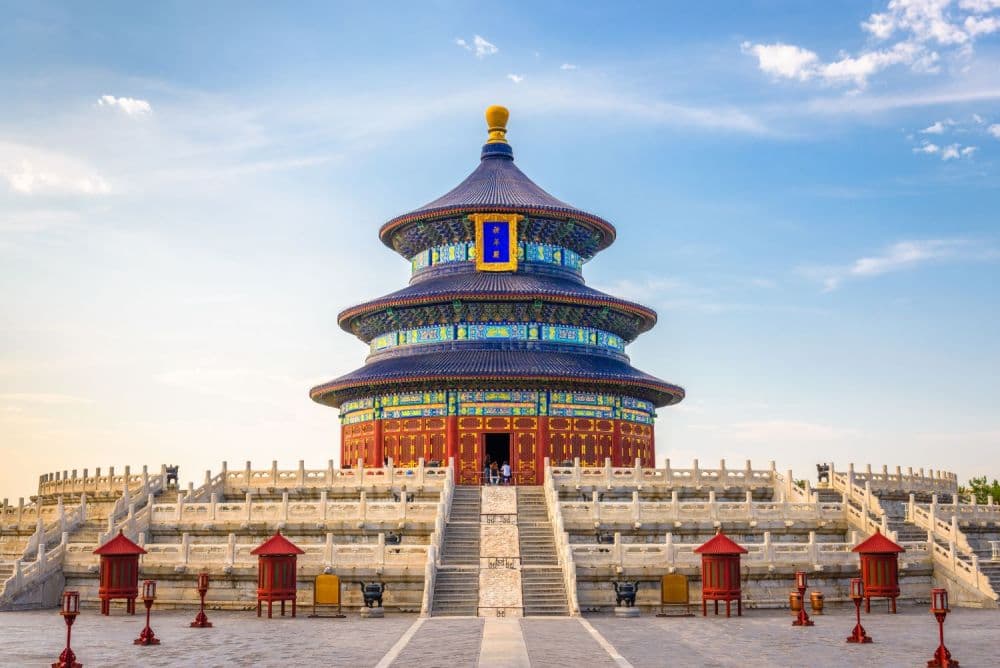
The Temple of Heaven, located in the southeastern part of central Beijing, China, is a sprawling complex of religious buildings where emperors of the Ming and Qing dynasties would perform solemn rites to ensure good harvests and divine favor. Covering an area of 2.73 km², it represents the most holy of imperial temples in China. Constructed from 1406 to 1420 during the reign of the Yongle Emperor, the architecture and layout of the Temple of Heaven is filled with symbolism. The complex includes the Hall of Prayer for Good Harvests, an iconic triple-gabled circular building, the Imperial Vault of Heaven, and the Circular Mound Altar. The entire park is ringed by a long wall with a gated tower to the north and south. The northern part of the complex is semi-circular, representing the heavens, and the southern part is square, echoing the shape of the Earth, reflecting the Chinese belief in a round heaven and square Earth. The Temple of Heaven was inscribed as a UNESCO World Heritage Site in 1998 and is regarded as a masterpiece of traditional Chinese culture and architecture.
Top 5 Reviews on Temple of Heaven
MartineW233
5.0Wrote on 19 Jul 2024
Amazing garden with Ming dynasty buildings
It’s a large park with different amazing buildings from the Ming dynasty. Suring summer very busy with Chinese tourists but really worth a visit and climb up the hill!