Ho Chi Minh Mausoleum Tourism
Historical Landmark4.0(11,797 reviews)
About Ho Chi Minh Mausoleum
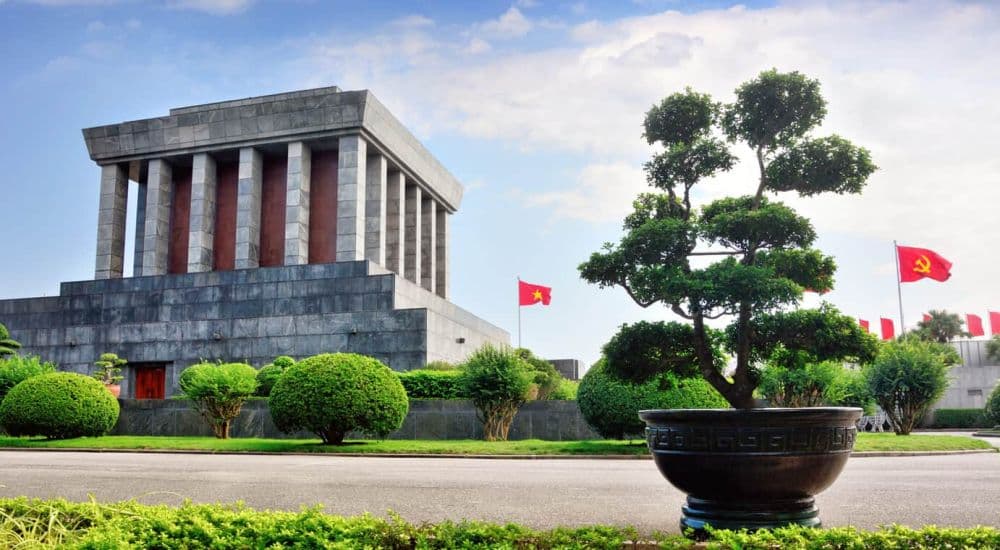
The Ho Chi Minh Mausoleum in Hanoi, Vietnam, is a monumental marble edifice that houses the embalmed remains of Ho Chi Minh, the revolutionary leader who declared independence from French colonial rule for Vietnam and became the country's first president. Located in the center of Ba Dinh Square, the place where Ho Chi Minh read the Declaration of Independence in 1945, the mausoleum is an important symbol of Vietnam’s national pride and a site of pilgrimage for many Vietnamese. The structure is influenced by Lenin's Mausoleum in Moscow but incorporates distinct Vietnamese architectural elements. Built from materials sourced from all over the country, Ho Chi Minh’s Mausoleum stands as a testament to his legacy. The site is typically open to the public in the morning and visitors are expected to dress respectfully and maintain a solemn demeanor inside. Photography inside the mausoleum is not permitted, and the mausoleum is closed periodically for maintenance and for the body of Ho Chi Minh to undergo preservation work. The surrounding gardens and the adjacent presidential palace, where Ho Chi Minh once lived, are also popular attractions.
Top 5 Reviews on Ho Chi Minh Mausoleum
woodfamily2013
5.0Wrote on 8 Jul 2024
Uncle Ho
We went very early as it was extremely hot . Did have to queue for a long time . However the line kept moving . As we entered the resting place of Ho Chi Minh it was darker and cooler . I was told off for talking loud to my wife by a guard . However upon reflection realised it was in fact disrespectful . As we walked (shuffled) past his body both of us found it very intense and moving . Would definitely recommend this to anyone as a ""do not miss""