Chini Ka Rauza Tourism
About Chini Ka Rauza
Opening and closing time of Chini Ka Rauza
| Monday | 06:00 AM - 06:00 PM |
|---|---|
| Tuesday | 06:00 AM - 06:00 PM |
| Wednesday | 06:00 AM - 06:00 PM |
| Thursday | 06:00 AM - 06:00 PM |
| Friday | 06:00 AM - 06:00 PM |

| Monday | 06:00 AM - 06:00 PM |
|---|---|
| Tuesday | 06:00 AM - 06:00 PM |
| Wednesday | 06:00 AM - 06:00 PM |
| Thursday | 06:00 AM - 06:00 PM |
| Friday | 06:00 AM - 06:00 PM |
| Saturday | 06:00 AM - 06:00 PM |
|---|
| Sunday | 06:00 AM - 06:00 PM |
|---|
Opening hours can change for special events or maintenance. Check with the local tourism office or the official website before you go.
| Adult | Free |
|---|---|
| Child | Free |
Prices are subject to change; please check before visiting.
✓ Carry water and be prepared for hot weather, especially if you visit during the summer months.
✓ It's advisable to hire a guide to fully appreciate the historical significance of the monument.
✓ Photography is allowed, so bring a camera to capture the intricate details of the tile work.
✓ Wear comfortable footwear as you will need to walk to reach the monument.
✓ Be respectful of the site as it is a tomb and has religious significance.
MadhulikaL4
4.0Wrote on 1 Sept 2022
Exquisite tile work
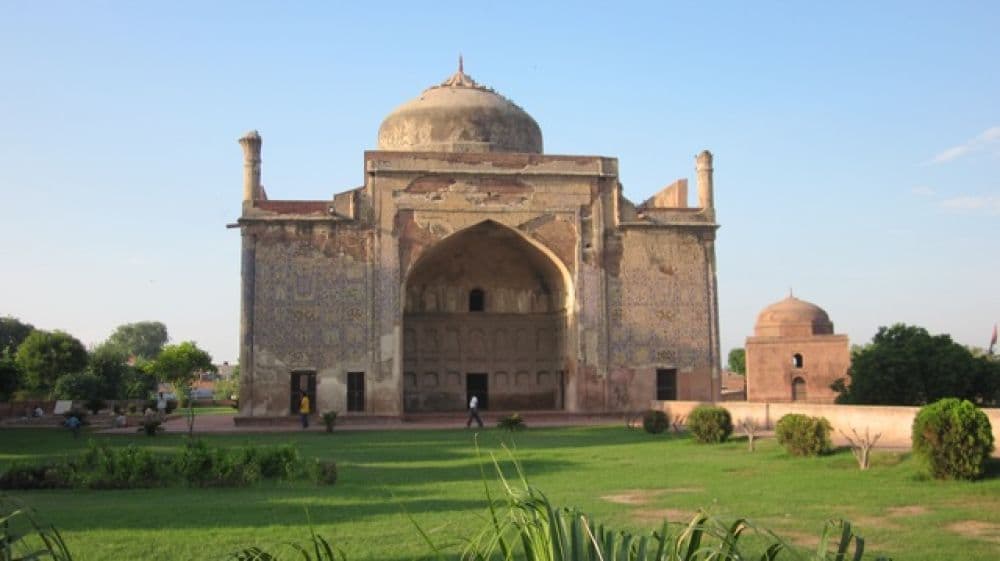
The Chini ka Rauza was built in 1639 by Mullah Shukhrulla Shirazi or Allama Afzal Khan, the prime minister of Shahjahan; he built the tomb for himself, following a tradition used by several others. Where Afzal Khan differed was in the architectural style he chose, a combination of Persian and Afghan styles. The Chini ka Rauza is named for the 'chini' ('porcelain' or tilework) that decorates it. When you approach the tomb from the road in front, the facade looks very shabby, with only very scattered bits of tiles in various shades of blue visible. But persevere; go around to the sides, and you'll see a lot more tilework, with lovely colours and intricate detailing. While the inside of the tomb looks unprepossessing from outside, it's worth it to go inside: there's some lovely painting and vaulted netting on the inside of the dome. No entry fees are charged for Chini ka Rauza.
SalimM
3.0Wrote on 9 Feb 2020
A neglected tomb
Not many guides have this on their itinery so unless you know about it in advance and ask to go there then you will not be visiting this place. This is a tomb of some poet who was a minister in the court of Shah Jahan. Not on a grand scale like other palaces or tombs, this is a smallish rectangular brown building. The style is said to be the only monument based on Afghan style. Its claim to fame was supposed to be the colourful tiles in its walls and ceilings. It is mostly in ruins now.
Nish0901
2.0Wrote on 25 Dec 2019
Near Tomb of Itimad-ud-Daulah
Chini Ka Rauza Mausoleum is near Tomb of Itimad-ud-Daulah. Between these two structures, Tomb of Itimad-ud-Daulah is a beautiful structure. No entry fee for Chini Ka Rauza Mausoleum. Photography is free.
ShoebSHK
1.0Wrote on 21 Dec 2019
not Maintained
one of the lessors know places in Agra, one of the reason might be the monument is not being maintained at all.
Brun066
4.0Wrote on 20 Nov 2019
A piece of Persia in Agra
This mausoleum offers an opportunity for the Agra visitor to appreciate a different style than the Mughal one, as it is usually experienced in the city. Note well: this happens despite the fact that the mausoleum chronologically is included into the Moghul era. But in this case the difference is easily understood, as regards both the architectural structure and the decoration. As for the architectural structure, many speak about "Afghan" style of monument, mainly because of the domed square chamber, and about "Persian" style especially because of the outer decoration (now somewhat ruined) with colored tiles. But actually the tiles were imported from China (whence the name of the mausoleum). This "otherness" of the monument is because the person buried in the mausoleum is Afzal Khan, a Persian scholar who was also the prime minister of Shah Jahan (the builder among other things of the Taj Mahal). It is true that all the Mughal civilization is ultimately of Afghan / Persian origin; but here it is a direct, immediate derivation from this culture, which makes this monument "other" than the Mughal ones of Agra. So even the hasty observer will have the opportunity to perceive the difference between this monument and the others he has already seen (or will see) in Agra.

Akbar's Tomb, Sikandra
Agra
4.5(29 reviews)
ItimadudDaulah's Tomb (Baby Taj)
4.5(2,399 reviews)Allahabad (Prayagraj)