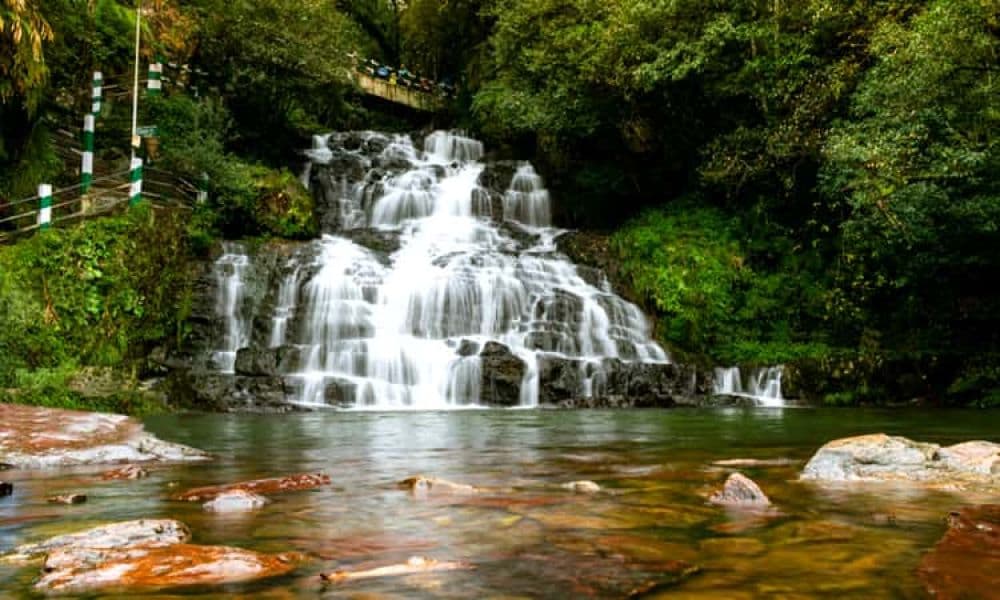
Elephant Falls Shillong (Shillong) History
Elephant Falls, Shillong - A Jewel of Meghalaya Tourism
History of Elephant Falls
The Elephant Falls in Shillong is named after an elephant-like rock at its foot, which was destroyed by an earthquake in the early 19th century. It has since been a prominent spot for both the British colonists and the local Khasi tribes. The British admired the falls' scenic beauty and referred to it as the "Elephant Falls," a name that is still used today, despite the disappearance of the so-named rock.
In the Khasi language, the falls are known as 'Ka Kshaid Lai Pateng Khohsiew' (or "The Three Step Waterfall"), as the waterfall comprises three mesmerizing cascades. The intimacy of this natural wonder with Shillong city makes it a hotbed for tourists throughout the year. Its history as a tourist attraction dates back to the time when the British used the area around Shillong as a summer retreat.
Visitor Information and Access
Elephant Falls is located just about 12 kilometers from the main city of Shillong. It is easily accessible by road, making it a perfect spot for day excursions. The falls have been well-maintained, with pathways and staircases leading to the different tiers, allowing visitors to closely witness the enchantment of each cascade.
The Evolution of Tourism at Elephant Falls
Over the decades, tourism at Elephant Falls has witnessed a significant evolution. Initially serving the British elite as a quaint getaway, it transitioned into a local leisure spot post-independence. With the growth of the Indian tourism industry, Elephant Falls gained recognition as a must-visit site in Northeast India.
The government and local entrepreneurs have played a vital role in developing the area’s infrastructure. Facilities such as parking, eateries, and souvenir shops have enhanced the visitor's experience without compromising the site’s natural charm.
Latest Tourism Trends at Elephant Falls
In recent years, Elephant Falls has adapted to the changing demands of the diverse tourist population. Some of the latest tourism trends include:
- Eco-tourism: There has been a rising trend in eco-conscious travel in the region. The falls’ premises are kept free from plastic, and tourists are encouraged to maintain the cleanliness and ecological integrity of the site.
- Adventure Tourism: For the thrill-seekers, trekking and hiking tours around the Elephant Falls are becoming increasingly popular, providing an exhilarating experience in the lap of nature.
- Photography Tours: The falls’ breathtaking beauty draws photography enthusiasts. Early mornings are colloquially known as 'photographers' hour', offering soft natural light which is perfect for capturing the grandeur of the falls.
- Cultural Tours: Tourists are also getting interested in the rich culture of the Khasi tribes. Cultural tours that showcase the local lifestyle, food, and customary practices are a hit among visitors looking for an authentic experience.
Future of Elephant Falls Tourism
The future of Elephant Falls tourism appears quite promising with continued efforts to balance conservation and visitor enjoyment. Sustainable tourism development is a key focus, aiming to ensure that Elephant Falls remains a pristine and beloved attraction for generations to come.
Other Places to Visit in Shillong
View all places to visit in Shillong
Umiam Lake
4.5(998 reviews)
Shillong Peak
4.0(139 reviews)
Ward's Lake
4.0(215 reviews)
Lady Hydari Park
3.5(212 reviews)
Don Bosco Museum

Sweet Falls
4.0(60 reviews)
Mawjymbuin Cave
4.0(266 reviews)
Laitlum Canyons
4.5(272 reviews)
Police Bazar Shillong
3.5(671 reviews)
Air Force Museum
4.0(112 reviews)
Cathedral of Mary Help of Christians
4.5(164 reviews)
Phan Nonglait Park

Mawphlang Sacred Forest
4.5(333 reviews)
Golf Course Shillong

Spread Eagle Falls
2.5(13 reviews)
All Saints Church
4.5(102 reviews)
Botanical Garden

Rhododendron Park

Crinoline Falls
3.0(15 reviews)


