If you are planning an Andaman trip and want something quieter than the usual Port Blair–Havelock circuit, Kalatang and the forest villages of Middle Andaman deserve your attention. This part of the islands gives you mangroves, reserve forest drives, small settlement life, and a slower rhythm that feels very different from the beach-heavy itineraries most travellers book first.
In this guide, you will find how to reach Kalatang, what the forest villages are like, the best time to go, where to stay, and how to plan a comfortable trip without wasting hours on avoidable detours. The details below are practical and meant for Indian travellers who want a realistic, well-paced Andaman plan.
Where Kalatang Fits Into an Andaman Itinerary
Kalatang is in Middle Andaman, along the road network that connects Port Blair to places further north like Rangat, Mayabunder, and Diglipur. This is not a place you usually visit as a stand-alone day trip from Port Blair; it works better as part of a longer overland journey through the islands. The surrounding landscape is dominated by forest, creek crossings, and small settlement pockets where daily life is tied closely to the land and sea.
When travellers talk about forest villages in Andaman, they usually mean the smaller settlements close to reserve forest stretches, plantations, and eco-tourism spots in Middle and North Andaman. These places are not flashy, and that is precisely the appeal. You get a sense of how people actually live in the islands, away from the resort zones and crowded beach schedules.
How to Reach Kalatang
By road from Port Blair
From Port Blair, you can reach Middle Andaman by road in roughly 3.5 to 6 hours depending on your exact stop, road conditions, ferry timings, and the convoy system if applicable on your travel date. The route usually passes through the ferry connection at Middle Strait and continues onwards through forested stretches and settlements. Because schedules can change, it is best to confirm the current road-and-ferry movement plan before you leave.
If you are travelling by private cab, expect a one-way cost that may fall around Rs.4,500-Rs.8,000 or more, depending on the distance, season, and vehicle type. Shared options can be cheaper but are less flexible. For a relaxed holiday, booking transport in advance is the smarter choice.
By combining ferry and road
Some itineraries to North and Middle Andaman use a combination of road and ferry segments. This can save time on certain routes, but it also means you should not plan your day too tightly. In Andaman, transport is part of the experience, but it also requires patience. Leave room for delays, especially if you are connecting to a hotel or another island the same day.
What the Forest Villages Feel Like
The forest villages around Kalatang are quiet, practical, and deeply tied to the natural environment. You will see narrow roads, bamboo and timber homes in some areas, local shops for daily essentials, and stretches of greenery that make the whole region feel open and uncrowded. The pace is slower than in Port Blair, and even the traffic feels more like a handful of vehicles than a constant stream.
For many visitors, the biggest surprise is how little needs to be “done” here. A walk through the village lanes, a stop for tea, a look at the surrounding forest edge, and a sunset drive can be enough for half a day. If your idea of travel includes quiet observation, photography, and conversations with locals, this part of Andaman gives you that without much effort.
What you can notice on the ground
- Dense tropical vegetation and roadside forest cover
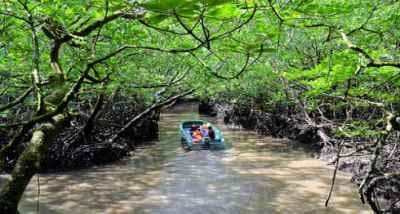
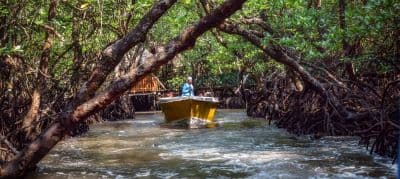
- Creeks, bridges, and mangrove-lined waterways in nearby stretches
- Small homestays or local guesthouses rather than large resorts
- Simple shops selling snacks, packaged drinks, and daily-use items
- Community life that feels unhurried and rooted in routine
Best Time to Visit Kalatang and Nearby Forest Areas
The most comfortable time to explore this part of Andaman is generally between October and April. The weather is more manageable, road travel is easier, and humidity is still present but less punishing than in the monsoon months. December to February is especially pleasant for sightseeing, though it is also the busiest holiday season.
From May to September, rain can affect road conditions and ferry schedules, and the forest areas become wetter and more slippery. If you travel during the monsoon, keep your expectations flexible and build extra buffer time into your plan. The scenery can be beautiful then, but it is not always convenient for a tightly packed itinerary.
What to Do in and Around Kalatang
Take a slow village-and-forest drive
The simplest and most rewarding activity is a road drive through the forested belt around Kalatang. You are not chasing a checklist here. Instead, you are watching the landscape change from settlement to reserve forest to creek-side patches and back again. Carry water, keep your phone charged, and do not rush the drive.
Look out for mangrove and creek landscapes
Middle Andaman has several stretches where the road passes close to water bodies, creeks, and mangrove edges. These are excellent for short photo stops. Early morning and late afternoon are the best times for soft light, cooler temperatures, and fewer vehicles on the road.
Combine with nearby eco-tourism stops
If your route allows, combine Kalatang with other Middle Andaman eco-tourism points such as mangrove walks, nature trails, and local beach stops in the Rangat belt. You do not need to cram too many places into one day. Two or three good stops are enough to make the journey feel memorable instead of tiring.
Where to Stay
Accommodation near Kalatang itself is limited, so many travellers stay in Rangat, Mayabunder, or in some cases at carefully chosen guesthouses along the route. Budget stays and homestays may start around Rs.1,200-Rs.2,500 per night, while cleaner mid-range rooms can fall in the Rs.2,500-Rs.5,000 per night range. If you want better food options and easier transport access, staying in Rangat is often the most practical option.
Book early if you are travelling during Christmas, New Year, long weekends, or school holidays. Smaller properties fill up quickly, and the best rooms are often taken by travellers on fixed road itineraries through the Andaman mainland routes.
Food, Water, and Daily Essentials
Do not expect a large restaurant scene in Kalatang. Food options are usually simple and local, with small eateries, tea stalls, and guesthouse kitchens handling most meals. Rice, fish curry, vegetable preparations, dal, and basic snacks are common. If you have specific food requirements, inform your stay in advance and carry a few backup snacks.
Water is another thing to manage sensibly. Carry a reusable bottle and keep extra packaged water with you for road sections. ATMs may be limited outside bigger towns, and mobile connectivity can be patchy in some pockets. It is wise to keep some cash handy for smaller purchases and local transport.
Suggested Trip Plan for First-Time Visitors
If you want to include Kalatang without feeling rushed, a 2-night / 3-day Middle Andaman plan works well. For a fuller experience that also includes nearby forest villages and eco-sites, plan 3 to 4 days.
| Day | Plan | Practical Note |
|---|---|---|
| Day 1 | Port Blair to Rangat or nearby stay | Start early; keep the day light because road and ferry timings can shift |
| Day 2 | Explore Kalatang and nearby forest stretches | Plan short stops, creek viewpoints, and a relaxed lunch |
| Day 3 | Visit another eco-site or continue northward | Good for combining with local beaches or mangrove walks |
If you are short on time, it is better to do fewer places properly than to attempt a rushed cross-island dash. Andaman travel feels much more enjoyable when you allow time for transport and weather to do their thing.
Travel Tips for a Smooth Visit
- Start early from Port Blair if you are covering Middle Andaman in one stretch.
- Keep your ID proof handy for ferry or check-post formalities if needed.
- Carry rain protection even in the dry season, as showers can appear unexpectedly.
- Use sturdy footwear if you plan any short forest walks or creek-side stops.
- Do not rely only on mobile internet for maps; download offline directions where possible.
- Book transport and stay in advance during peak holiday months.
Also, be respectful around village spaces. Ask before taking close-up photos of people or homes, avoid littering, and keep noise levels low. These are living communities, not theme parks, and the experience is better when you travel with that mindset.
Who This Part of Andaman Suits Best
Kalatang and the surrounding forest villages are ideal if you like slow travel, road journeys, and less commercialised places. They suit couples who want quiet time, families who are comfortable with simple stays, and travellers who prefer nature over nightlife. They are also a good fit if you have already seen the classic Andaman beaches and want to understand the islands beyond the resort shoreline.
If you want shopping, cafés, and a packed sightseeing schedule, this is probably not where you should spend most of your time. But if you are looking for atmosphere, open roads, and a stronger sense of place, the journey is rewarding.
Frequently Asked Questions
Is Kalatang easy to visit from Port Blair in a day?
It is possible, but not ideal if you want a relaxed experience. The road journey itself takes several hours each way, and delays can happen because of ferry movement and road conditions. A night in Middle Andaman makes the trip far more comfortable.
Are there good hotels in Kalatang itself?
Accommodation options right in Kalatang are limited compared with bigger towns. Most travellers stay in Rangat, Mayabunder, or nearby settlements where there are more practical guesthouses and homestays. Always confirm the location before booking so you do not end up too far from your planned route.
What should I pack for forest village travel in Andaman?
Carry light cotton clothing, a rain jacket, sunscreen, insect repellent, a refillable water bottle, and comfortable footwear. A torch, power bank, and some cash are also useful. If you are travelling in the monsoon, waterproof shoes or sandals help a lot.
Is mobile network available in and around Kalatang?
Connectivity can be patchy in parts of Middle Andaman. You may get workable signal in some stretches and weak or no signal in others. Download maps, save hotel contacts, and tell someone your route before you leave.
Can I combine Kalatang with other Andaman destinations?
Yes, and that is usually the best way to plan it. Kalatang works well with Rangat, Mayabunder, and other forest or eco-tourism spots in Middle Andaman. If you are also visiting Port Blair, Havelock, or Neil, keep a buffer day so the overland travel does not feel rushed.
Is this area suitable for children or senior travellers?
Yes, if the itinerary is kept simple and the travel time is planned well. The roads can be long, so frequent breaks are helpful. Choose comfortable stays, avoid overpacking the day, and check vehicle comfort before booking.
Kalatang and the forest villages of Andaman are for travellers who enjoy the journey as much as the destination. The experience is quiet, green, and grounded in everyday island life, which makes it a refreshing change from the more crowded tourist circuits.
If you are planning an Andaman holiday and want help shaping a balanced route through Port Blair, Middle Andaman, and beyond, this part of the islands is worth adding to your list. Please share this post with fellow travellers who would enjoy a calmer, more local side of Andaman.
Planning a Andaman trip?
Tell us your dates and who is travelling. Up to three local travel companies send you their itinerary and price.
Get free quotesDisclaimer: The information in this blog is for general information only. We try to keep it accurate and up to date, but TravelSetu accepts no liability for errors or omissions. If you believe any part of it infringes your rights, please write to info@travelsetu.com.