Ashrafi Mahal Tourism
About Ashrafi Mahal


| Monday | 6:00 am - 7:00 pm |
|---|---|
| Tuesday | 6:00 am - 7:00 pm |
| Wednesday | 6:00 am - 7:00 pm |
| Thursday | 6:00 am - 7:00 pm |
| Friday | 6:00 am - 7:00 pm |
| Saturday | 6:00 am - 7:00 pm |
| Sunday | 6:00 am - 7:00 pm |
Opening hours can change for special events or maintenance. Check with the local tourism office or the official website before you go.
| Adult | INR 25 |
|---|---|
| Child | Free entry for children below the age of 15 years |
Prices are subject to change; please check before visiting.
✓ Visit Early
Visit early in the day to avoid the midday heat and crowds.
✓ Guide Services
Consider hiring a guide to enhance your knowledge of the historical context.
✓ Wear Comfortable Footwear
Wear comfortable footwear as the ruins involve a fair amount of walking over uneven surfaces.
✓ Carry Water
Keep hydrated by carrying water, especially if visiting in the warmer months.
✓ Photography
Photography is allowed, so bring your camera for some beautiful shots of the architecture and panoramic views.
Vikassadhotra
3.0Wrote on 7 Nov 2022
Get a photo clicked
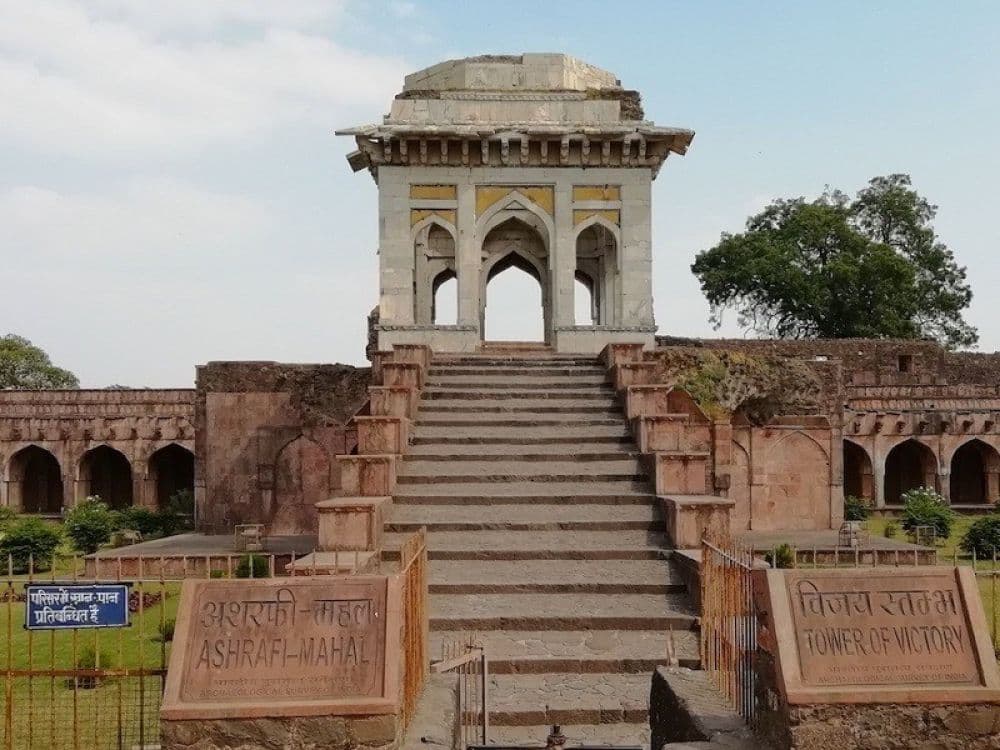
It is located opposite to Jami Masjid and entry is free. It is also called Vijay Stambh. Time spent will be 10 to 15 mins. Since you will visit Jami Maajid so have a photo clicked here too.
dlnrao1954
5.0Wrote on 21 Mar 2022
Excellent
You may pass up visiiting this if you are in a hurry. But do climb the steps and see the huge structure which though titled as a palace is actually a madarsa/school. Must see
PMV_13
4.0Wrote on 7 Mar 2022
Grand size, totally destroyed. No renovation
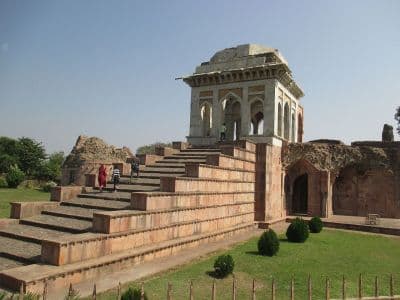
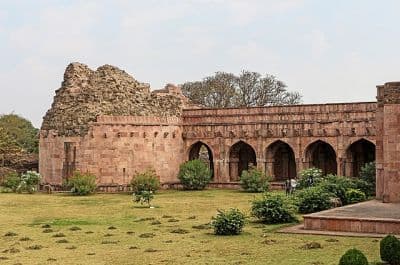
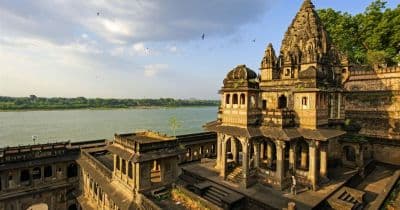
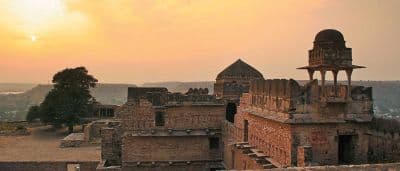
I have paraphrased the information given at the Mandu Tourism, Wikipedia, AKS, an architect’s web page and ASI websites and added my thoughts about Ashrafi Mahal at Mandu. This has been done with the aim of not only giving historical information but also making it more interesting to read. (I hope 😊) Right across Jama Masjid one sees a grand staircase with very wide stone steps. Steps so wide that it takes 2-3 steps to clear that one broad stone step. There are corridors with arched rooms on both sides of this grand staircase. At the top of this grand staircase is a beautifully constructed pavilion. Behind this Pavilion is one huge square-shaped courtyard surrounded by ruins of what at one time must have been rooms and mighty towers. This huge monument is called Ashrafi Mahal. Ashrafi Mahal started as a Sanskrit University around 1024 during the reign of Raja Bhoj of Dhar. It was a residential university. Students lived in the rooms on the ground floor and attended the classrooms on the first floor after climbing the grand staircase. When Hoshang Shah ascended the throne of Mandu he converted this edifice in a Madrasa attached to a mosque. From the ruins found today archeologists and historians believe, the Madrasa- Mosque complex was planned as a great square with open spaces enclosed all around by a number of small rooms for students. All four corners of the great square were round towers. Of these four towers, two have been totally wiped from existence. Huge in size and tall in height ruined remains of the remaining two round towers bear mute testimony as to how grand these four towers must have looked at the height of its heyday. Mahmud shah came to power after Hoshang Shah. He ordered a great tomb to be built for himself. Hoshang Shah’s madrasa was chosen to build the tomb. The design of the madrasa, therefore, was changed and the courtyard was turned into a tomb. The dome of this tomb is made with black, yellow, and white marble. Historians believe that the tomb was a square hall of 65 feet topped with a huge dome. When completed his monument was grander than the Jami Masjid and Hoshang Shah's tomb. Experts are of the opinion that the tomb was constructed in a hurry, without proper planning, and by unskilled workers. This soon resulted in it getting delipidated and eventually being lost in time without much trace. As per documented information, it was a Sanskrit University, a Madrasa, and a Tomb. There is no mention of any Ashrafi or mahal anywhere. Maybe the following legend narrated to us by our guide explains the name: - The favourite concubine who was dark for whom camphor was added to Kapur Talav where she took and took bath to become fair was also quite plump. The king used to place one Ashrafi on each step. The consort could claim the Ashrafi as her own if she cleared each step in ONE STRIDE. Steps were very wide and one had to do something like hop-skip and jump to collect the Ashrafi and also clear the step in one stride. It was a very strenuous exercise to be repeated at every step every day. As per the narration by the guide, both, the Kapur Talav and the Ashrafies had desired effect, and the dark and plump consort turned as beautiful as a nymph :-), hence the name as Ashrafi Mahal. There are times when what the guide tells you is much more interesting than the dry information given by internet sources, though it may be far from the facts. 😊
Singh_Blog
3.0Wrote on 12 Sept 2021
Ashrafi Mahal Opposite Jami Masjid , its approach of a noble flight of stairs aligning with and mirroring that Masjid
Well It is just a another ruined structure in central Mandu area, in front of Jami Masjid , with too much falls or fairy tails of past times for telling stories for this Ashrafi Mahal. If you leave this spot then you will leave if you do not have too much time. Too much food vendors and shops are placing in front of this front side. Ticket - Free for all Must have - Proper shoes & water bottle, Cap / umbrella . The structure is composed of three distinct buildings, built at different times. Only a few portions of the mausoleum itself still remain, though it can be ascertained that it was a square hall of 65' side covered by an immense dome. Each wall was faced with white marble. The last structure comprising the Ashrafi Mahal was a Tower of Victory. Standing as a unique building amidst the many ruins of Mandu, Ashrafi Mahal was initially made a madrasa (Islamic-school) which collapsed with time because of its amateurish design
gluttonyguilts
5.0Wrote on 1 Oct 2019
Tiring but beautiful
It was constructed so that the queens of Mahmud Khalji can lose weight and so the stairs towards the top are arduous to climb onto. There is a beautiful garden at the top as well.

Baz Bahadur's Palace
4.0(81 reviews)Ujjain