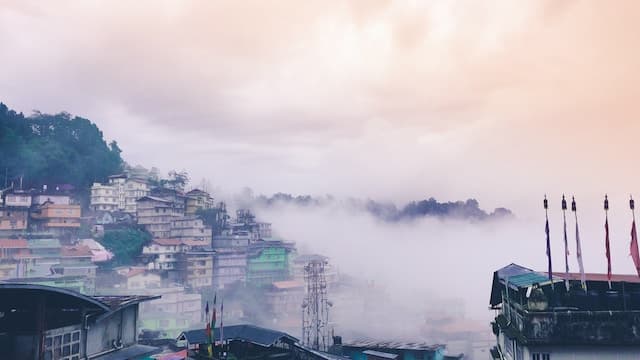
If you are planning a slow, ground-level trip to Sikkim, understanding village commons and land use will change the way you see the state. Beyond monasteries and viewpoints, Sikkim’s villages are shaped by shared grazing lands, terrace farms, forest edges and carefully managed community spaces that support daily life, local food and rural tourism.
This guide is for travellers who want more than a sightseeing checklist. You will learn how land is used in Sikkim’s villages, why commons matter, which areas are worth exploring, and how to travel respectfully through these landscapes without disrupting local life.
Why Sikkim’s village landscapes feel different
Sikkim is small, but its geography changes quickly as you move from the lower foothills near Jorethang and Namchi to the mid-hills around Ravangla, Yuksom and Dzongu, and up toward the high-altitude valleys near Lachen and Lachung. In many villages, land is not just divided into private plots; it is also shared through community spaces that support grazing, collection of forest produce, water sources and village movement routes.
For a traveller, this means you will often see terraced fields beside patches of community forest, kitchen gardens near prayer flags and trails, and local homes that are closely tied to the slope and the season. If you spend even a day in a village homestay, you begin to notice that land use here is practical, social and ecological at the same time.
What village commons mean in Sikkim
Village commons are shared spaces used by the community rather than by one household alone. In Sikkim, these may include grazing land, pathways, water springs, community forests, gathering grounds and sometimes areas used for festivals or local meetings. They are especially important in hill regions where every usable patch of land has a purpose.
These commons help villagers manage daily needs without putting too much pressure on private farmland. For example, in some villages near West Sikkim and North Sikkim, families may use common routes to bring cattle, collect leaf litter for compost, or access water sources. In the eastern and southern districts, community-managed spaces also support cardamom cultivation, bamboo growth and small-scale farming activities.
As a traveller, you should think of these spaces as living infrastructure. They are not empty land, and they are not public parks in the usual tourist sense. Local customs often decide who can use them, when and how.
How land is used in Sikkim’s villages
Terrace farming on steep slopes
Terrace farming is one of the clearest signs of land use in Sikkim. Rice is grown in lower and mid-altitude terraces where water is easier to hold, while maize, millet, vegetables and pulses are planted according to altitude and season. In many villages, you will see narrow stone or earth terraces carved into hillsides, each one carefully maintained to prevent soil erosion.
For travellers, the best places to observe this are around Ravangla, Yangang, Tendong and parts of West Sikkim. If you visit during the monsoon or just after, the terraces can be intensely green, though roads may be slower and landslide risk higher.
Cardamom gardens and cash crops
Large parts of Sikkim’s lower and mid-hill rural economy have long depended on cardamom, orange, ginger, turmeric and seasonal vegetables. In many villages, land is used in mixed ways: a homestead, a small vegetable patch, trees for shade, and cardamom under the canopy. This makes the landscape feel layered, not uniform.
If you are travelling through South Sikkim or around Mangan and nearby hill routes, ask your homestay host about local agriculture. You may see drying sheds, nursery plots and small processing areas. Please do not enter plantations without permission, and avoid stepping into crop rows for photographs.
Forests, springs and sacred spaces
Community forests and spring-catchment areas are crucial in Sikkim. Villages often depend on small forest patches for water flow, leaf litter, fuelwood in limited cases, medicinal plants and soil protection. Some forests are also treated as sacred or culturally sensitive, which means access may be limited or guided by local rules.
This is especially relevant in areas near Dzongu, where Lepcha communities have strong cultural ties to land and water, and in villages around monasteries, where certain slopes or groves may carry religious significance. When you are unsure, ask before entering any forest track or clearing.
Where you can see these landscapes as a traveller
| Area | What you can observe | Typical travel time from Gangtok |
|---|---|---|
| Ravangla and nearby villages | Terrace farming, village paths, homestays, mixed gardens | About 4-5 hours by road |
| Yuksom and West Sikkim villages | Forest edges, village commons, heritage trails, small farms | About 5-6 hours by road |
| Dzongu | Community-managed land, traditional village life, forest-water systems | About 5-7 hours depending on route and road conditions |
| Namchi and South Sikkim belt | Hill agriculture, cardamom gardens, village markets | About 4 hours by road |
| Lachen and Lachung valleys | High-altitude pastoral use, alpine landscapes, limited cultivation | 6-8 hours or more, depending on weather and permits |
These timings are indicative and can change significantly with roadwork, rain, landslides and permit-related checks. Always confirm with your hotel, driver or local operator before leaving.
Best time to travel if you want to understand village land use
March to May is a good season for seeing fresh agricultural activity, flowering trees and active village movement. June to September brings lush growth, but also heavy rain, slippery roads and occasional travel delays. October to November is often excellent for clear views and harvest-related village activity. December to February can be quiet in some villages, especially in higher areas, though lower regions remain accessible.
If your interest is primarily in land use, the post-monsoon and spring months usually offer the best balance of visibility and mobility. Try to avoid planning too tightly around one day’s road conditions, especially in North Sikkim and remote westward routes.
How to experience village commons respectfully
Stay in homestays run by local families
A homestay is often the easiest way to learn how land is used in Sikkim. Many hosts can explain which fields belong to the family, which spaces are shared, where water comes from and how crops change through the year. Expect homestays to cost around ?1,200-?3,500 per night, often with meals included or available at an extra charge.
Walk only on marked or clearly used paths
Village roads, footpaths and field bunds may look open, but many are part of working land. Stay on established paths, ask before entering terraces, and never treat a shortcut through a field as harmless. This is especially important during transplanting, harvest and grazing periods.
Ask before photographing people or private work areas
A farmer carrying vegetables, a herder near a grazing patch or a family near a spring may not want a camera in their face. A simple greeting in a polite tone goes a long way. If someone says no, move on without hesitation.
Do not assume common land is unused land
Many visitors mistake commons for vacant space because it may not be fenced. In reality, these areas are often carefully managed and may support livestock, water systems or community events. Use them with the same caution you would show in someone’s front yard.
Practical travel tips for rural Sikkim
Road travel in Sikkim can be slow even on short distances. A 60-80 km journey may take half a day, especially on mountain roads. For local sightseeing, hire a shared or private vehicle through a registered operator; a day trip often costs around ?3,500-?7,500 depending on distance, vehicle type and season.
Pack shoes with good grip, a light rain jacket, a power bank and a small day bag. In village areas, cash is still useful because digital payments may not always work reliably. Network coverage can be patchy, especially in remote valleys.
If you are visiting protected or border areas such as parts of North Sikkim, permit requirements may apply and can change. Confirm documentation in advance through your hotel, tour operator or local authorities. Keep a buffer day in your itinerary if your route depends on weather or road clearance.
What village land use means for local food and culture
Land use in Sikkim is not just about farming; it shapes what you eat, how festivals are held and how villages maintain identity. The same terrain that supports terrace farming also supports maize flour, millet snacks, leafy vegetables, local pickles and seasonal herbs. In many homestays, your meals will reflect what grows nearby rather than a standard tourist menu.
Village commons also influence cultural life. Open spaces may host community gatherings, harvest celebrations, ritual offerings or meetings where local issues are discussed. This is why a walk through a village in Sikkim can feel both ordinary and deeply organised. The landscape is doing a lot of work behind the scenes.
Frequently Asked Questions
Are village commons in Sikkim open to tourists?
Some shared spaces can be visited, but they are not freely open in the same way as a public garden. Access depends on local customs, current use and the sensitivity of the area. Always ask your host or driver before entering a common grazing area, forest patch or water source zone.
Which Sikkim regions are best for seeing rural land use?
Ravangla, Yuksom, Namchi, Dzongu and parts of the lower North and West Sikkim belts are especially useful if you want to understand village landscapes. These areas show terraces, mixed farming, forest dependence and homestay-based rural life. High-altitude places like Lachen and Lachung are beautiful, but they are less about agriculture and more about seasonal pastoral and mountain use.
Do I need a guide for village travel in Sikkim?
You do not always need a guide for short, well-known village visits, but one is useful if you want to learn about land use, local crops and community practices. A local guide can also help you avoid entering restricted or culturally sensitive spaces. For remote valleys, a guide or driver familiar with the region is a smart choice.
Is Sikkim suitable for slow travel and village stays?
Yes, very much so. If you enjoy early mornings, local food, field walks and quieter evenings, Sikkim rewards slow travel better than rushed sightseeing. A 3- to 5-night village-based itinerary can give you a far better sense of the state than a quick circle of viewpoints.
How much should I budget for a village-focused Sikkim trip?
For a comfortable trip, budget around ?2,500-?6,000 per person per day if you are sharing transport and staying in good homestays. Costs rise if you need private vehicles, special permits, or winter/monsoon flexibility. Prices vary by season and road conditions, so confirm in advance.
What should I avoid when visiting village commons?
Avoid walking through fields, picking plants, feeding livestock or entering forest edges without permission. Do not litter, play loud music or assume that a scenic patch is empty land. In a hill state like Sikkim, even small disturbances can affect farms, water systems and local routines.
Conclusion
If you look closely, Sikkim’s villages are not just scenic stops between bigger attractions. They are working landscapes where commons, farms, forests and homes depend on each other every day. Travel gently, ask questions, and you will come away with a far richer understanding of the North-East than any viewpoint alone can offer.
If you found this guide useful, please share the post with fellow travellers planning a thoughtful trip to Sikkim.
Planning a North-East trip?
Tell us your dates and who is travelling. Up to three local travel companies send you their itinerary and price.
Get free quotesDisclaimer: The information in this blog is for general information only. We try to keep it accurate and up to date, but TravelSetu accepts no liability for errors or omissions. If you believe any part of it infringes your rights, please write to info@travelsetu.com.