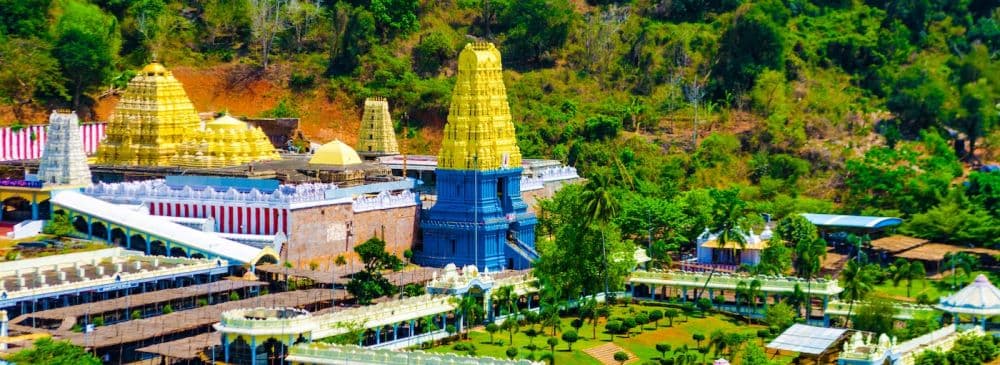
Simhachalam Temple (Visakhapatnam (Vizag)) FAQs In 2026 - 2027
Hindu Temple
10 FAQs on Simhachalam Temple
What is the significance of Simhachalam Temple?
Simhachalam Temple is a historical Hindu temple located on the Simhachalam hill, which is 800 meters above sea level in Visakhapatnam, Andhra Pradesh, India. The temple is dedicated to Lord Narasimha, an avatar of Vishnu. It is known for its rich cultural heritage and the blend of Oriya and Dravidian styles of architecture. It is also one of the 18 Narasimha Kshetras in India, making it a significant pilgrimage site for Vaishnavism followers.
Can you describe the architecture of Simhachalam Temple?
Simhachalam Temple showcases a unique fusion of different architectural styles, principally the Kalinga and the Dravidian. The temple has a square-shaped sanctum (the Vimana) adorned with intricate carvings and sculptures. The temple's gopuram (tower) is also beautifully carved. The temple complex includes a natya mandapa (dance hall), a kalyana mandapa (wedding hall), and numerous shrines dedicated to various deities.
What is the best time to visit Simhachalam Temple?
The best time to visit Simhachalam Temple is during the cooler months of October to March when the climate is pleasant. Pilgrims may also prefer to visit during special festivals like Chandanotsavam, usually held in April, when the deity is covered in sandalwood paste throughout the year and the paste is removed only on this occasion.
What are the timings for visiting Simhachalam Temple?
Simhachalam Temple usually opens early in the morning around 4:00 AM and closes in the evening at 9:00 PM. Special rituals and pujas are conducted at different times of the day. It's advisable to check the current timings before planning a visit as they may vary on special occasions and festival days.
Are there any entry fees to visit Simhachalam Temple?
There is no general entry fee for visiting Simhachalam Temple. However, there may be fees for special pujas, darshan, or rituals for those who choose to participate in them. Additionally, car parking and camera charges may apply.
What facilities are available for tourists at Simhachalam Temple?
Facilities for tourists at Simhachalam Temple include cloak rooms for storing luggage, shoe stands, drinking water, and facilities for performing ablutions before entering the temple. There are also shops selling religious artifacts, books, and refreshments. Pilgrims and tourists can also find accommodation options like guest houses and lodges near the temple premises.
How can one reach Simhachalam Temple?
Simhachalam Temple is easily accessible from Visakhapatnam city. Visitors can reach the temple by bus, taxi, or auto-rickshaw from various points in the city. The nearest airport is the Visakhapatnam Airport, and the nearest railway station is the Visakhapatnam Junction, which is well-connected to major cities in India. For those opting to drive, there's a ghat road leading to the hilltop where the temple is situated.
Is there a dress code for entering Simhachalam Temple?
Yes, Simhachalam Temple maintains a traditional dress code for entering the sanctum sanctorum. Men are expected to wear dhotis or pajamas with a cloth top or formal shirts and trousers, while women are expected to wear sarees, half-sarees, churidars with a dupatta. Modern outfits such as shorts, skirts, sleeveless tops, and other revealing clothing may not be permitted.
Are there any restrictions on photography at Simhachalam Temple?
Yes, photography is usually restricted inside the main temple complex, especially in the sanctum sanctorum. Outside the temple, visitors may be allowed to take photographs, but it's best to check with temple authorities or signage regarding any specific guidelines or fees for photography.
Can non-Hindus visit Simhachalam Temple?
Non-Hindus are welcome to visit the temple complex but may not be allowed to enter the innermost sanctum where the deity is located. This is a common practice in many Hindu temples due to religious customs. Visitors should respect the temple's traditions and follow the guidelines provided by temple authorities.
Explore 2 Other Religious Places to Visit in Visakhapatnam (Vizag)
View 2 Other Religious Places to visit in Visakhapatnam (Vizag)Other Places to Visit in Visakhapatnam (Vizag)
View all places to visit in Visakhapatnam (Vizag)
RK Beach (Ramakrishna Beach)
4.0(867 reviews)
Kailasagiri Hill Park

Submarine Museum (INS Kursura)
4.5(1,634 reviews)
Yarada Beach
4.5(356 reviews)
Araku Valley
4.0(782 reviews)
Borra Caves
4.5(1,314 reviews)
Rushikonda Beach
4.0(713 reviews)
Bheemunipatnam Beach (Bhimli)
4.0(129 reviews)
Dolphin's Nose Lighthouse

Visakha Museum
4.5(57 reviews)
Ross Hill Church
4.5(46 reviews)
Katiki Waterfalls
4.0(91 reviews)
Indira Gandhi Zoological Park
4.0(263 reviews)
Tenneti Park
4.5(52 reviews)
Thotlakonda Buddhist Complex

VUDA Park
4.0(176 reviews)
Matsyadarshini Aquarium
3.5(59 reviews)
Shivaji Park Visakhapatnam

War Memorial at Beach Road


