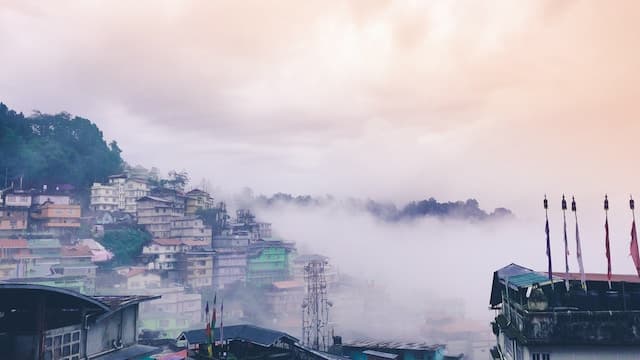
If you are planning a trip to Sikkim and want to understand what makes its buildings so distinctive, this guide will help you see the state with different eyes. You will learn how Sikkim’s traditional architecture reflects its climate, Buddhist and Lepcha-Bhutia heritage, and the practical needs of mountain life, along with the best places to notice these details in real settings.
What Makes Sikkim’s Traditional Architecture Distinct
Sikkim’s traditional architecture is shaped by the Himalayas as much as by culture. Heavy rain, cold winters, steep slopes, and frequent seismic activity have influenced how homes, monasteries, and public spaces are built. Instead of large ornamental structures, you will often see compact houses with sloping roofs, timber framing, stone plinths, and walls designed to keep interiors warm and dry.
The main architectural influences come from Lepcha, Bhutia, and Nepali communities, along with Tibetan Buddhist traditions. That is why you will find a mix of prayer flags, carved wooden details, whitewashed monastery walls, and colourful window frames in different parts of the state. In villages and older town neighbourhoods, the architecture still feels intimate and functional rather than grand.
Materials and Building Styles You Will Notice
Traditional builders in Sikkim worked with what was available locally. Stone, wood, bamboo, mud mortar, and slate or corrugated roofing were common. Today, many homes have modern additions, but older structures still show the original logic of mountain construction.
Stone foundations and timber frames
In many older houses, the lower level is built on stone for strength and to protect against moisture. Timber is used for beams, pillars, balconies, and roof support. This combination helps the house stand up to rain and temperature changes while keeping the structure flexible during tremors.
Sloping roofs and wide eaves
The roof is one of the easiest features to spot. Sloping roofs help snow and rain run off quickly, while wide eaves protect the walls and verandahs. In older settlements, you may see wood shingles or slate; in newer areas, metal sheets are more common, though less charming visually.
Wooden details and painted finishes
Carved lintels, window frames, and balcony railings add character without excessive decoration. In monasteries and some traditional houses, you may also notice painted motifs, especially around entry points. These often carry symbolic meaning connected to prosperity, protection, or Buddhist beliefs.
Traditional Sikkimese Houses: What to Look For
The traditional house in Sikkim is practical, family-oriented, and adapted to local conditions. Many older homes have a ground floor used for storage, livestock, or tools, with the main living area above. This layout keeps people warmer and more comfortable in the monsoon and winter months.
Look for a central kitchen or hearth area, which has historically been the heart of the home. In many Himalayan households, the kitchen is where the family gathers, food is prepared, and guests are welcomed. Small windows are common in colder places because they help reduce heat loss, while upper verandahs or balconies may be used for drying vegetables, maize, or firewood.
If you are walking through older villages near Gangtok, Namchi, Ravangla, or in parts of North and West Sikkim, you may spot homes with wooden screens, raised platforms, and carved posts. Some villages have newer concrete houses, but even then, people often preserve traditional roof shapes or decorative elements.
Monastic Architecture in Sikkim
Sikkim’s monasteries are among the best places to understand traditional architecture because they bring together spiritual symbolism and mountain construction. They are not just religious spaces; they are carefully planned buildings with courtyards, prayer halls, assembly spaces, and painted interiors that guide movement and ritual.
Key features of monasteries
You will often see whitewashed walls, red or ochre trim, and roofs that taper gracefully against the mountain skyline. Inside, the prayer hall may have columns, low seating platforms, butter lamp spaces, and large murals or thangkas. Entrance gates can be modest or richly decorated depending on the monastery’s age and importance.
Monasteries are usually positioned on elevated land, sometimes overlooking valleys or town edges. This location is both practical and symbolic: it keeps the buildings above damp ground while giving them a sense of spiritual presence. Courtyards are used during festivals, mask dances, and community gatherings, so open space is part of the architecture rather than an afterthought.
Places where you can see excellent examples
Rumtek Monastery near Gangtok is one of the most recognised examples of monastic architecture in Sikkim. Pemayangtse in West Sikkim is another important site, especially if you want to understand older Himalayan Buddhist design. Enchey Monastery near Gangtok, Tashiding in West Sikkim, and Phodong in North Sikkim also offer a strong sense of place, though each has its own layout and visual style.
Regional Differences Across Sikkim
Sikkim is small, but its architecture changes noticeably from one region to another. Altitude, ethnicity, access to materials, and settlement patterns all play a role. If you are travelling across the state, pay attention to how houses and public buildings adapt to different landscapes.
| Region | What you may notice | Good places to observe |
|---|---|---|
| East Sikkim | More urban influence, mixed residential styles, monasteries near towns | Gangtok, Rumtek, Enchey area |
| West Sikkim | Older monastic complexes, village homes, more visible traditional forms | Pemayangtse, Tashiding, Yuksom |
| North Sikkim | Stronger climatic adaptation, simpler mountain housing, remote settlement patterns | Lachen, Lachung, Chungthang |
| South Sikkim | Village homes, temples, and a blend of traditional and newer construction | Namchi, Ravangla, nearby villages |
In the higher and more remote areas, practical design becomes even more important. Homes are often compact, with limited openings and materials chosen to handle colder weather. In and around Gangtok, you are more likely to see a blend of traditional motifs and modern building methods because of the city’s growth and tourism economy.
Best Places in Sikkim to Study Traditional Architecture
If your goal is to see architecture rather than just pass by it, plan your trip around a few specific places. You do not need special expertise; even a slow walk through the right neighbourhoods will reveal a lot.
- Yuksom – A historic town with a strong old-Sikkim atmosphere, useful for observing village houses and monastic heritage.
- Pemayangtse – One of the best places for monastery architecture and traditional Buddhist design.
- Tashiding – Good for seeing religious structures in a quieter setting, away from larger town traffic.
- Rumtek – A major monastery complex with scale, symmetry, and strong visual identity.
- Lachen and Lachung – Useful for understanding high-altitude settlement style and functional mountain housing.
- Gangtok older quarters – Helpful if you want to compare traditional forms with contemporary Sikkimese urban architecture.
A half-day can cover one monastery and a nearby village cluster, but a slower 3-5 day trip lets you compare East, West, and North Sikkim properly. If you are travelling in winter months like December to February, carry warm clothing and expect some remote routes to be weather-sensitive. In the monsoon, from June to September, the landscape is lush but road conditions can affect access, so keep buffer time in your plan.
How to Read Sikkimese Architecture Like a Local
When you look at a building in Sikkim, try to understand what problem it is solving. Is it trying to keep out rain? Hold warmth inside? Create a gathering place for the community? Host a religious ritual? The answer usually explains the shape better than any style label.
Also notice the relationship between the building and the land. Many structures are stepped into slopes rather than placed flatly on them. Courtyards, retaining walls, and raised platforms are common because they help create stable living spaces on difficult terrain. This is one reason Sikkimese architecture feels so closely tied to the environment.
Another useful detail is colour. White walls, red bands, blue roofs, and bright prayer flags often appear together in religious or community spaces. These colours are not random decoration; they help identify the function and cultural identity of the building.
Practical Travel Tips for Architecture-Focused Trips
If you are travelling specifically to study architecture, move slowly and stay flexible. A calm morning walk through a village or monastery compound is better than trying to rush multiple sites in one day. Early morning and late afternoon also give you softer light, which makes details easier to notice and photograph.
Choose stays in Gangtok, Pelling, Yuksom, Namchi, or Lachung depending on your route. Budget homestays may cost around Rs.1,200-Rs.2,500 per night, while comfortable hotels can range from Rs.3,000-Rs.7,000 per night, and boutique or premium stays may go higher. Transport within Sikkim often involves hired cars or shared vehicles, and local costs vary by route, season, and road conditions, so confirm before booking.
When visiting monasteries, dress modestly, speak softly, and check if photography is allowed in inner spaces. Some places request a small entry or parking fee, while others rely on donations. Rules can change, so it is best to ask locally at the gate or with your driver before you enter.
Frequently Asked Questions
What is the main feature of traditional Sikkim architecture?
The main feature is adaptation to the mountain environment. You will commonly see stone foundations, timber frames, sloping roofs, and compact layouts that suit cold weather and rainfall. In religious buildings, Buddhist symbolism and monastery planning add another layer to the design.
Which part of Sikkim is best for seeing old architecture?
West Sikkim is especially rewarding if you want older monastic and village structures. Places like Yuksom, Pemayangtse, and Tashiding are particularly useful for understanding the region’s architectural heritage. East and North Sikkim also have important examples, but the feel is different.
Are Sikkimese houses made only of wood?
No, traditional houses usually combine stone, timber, mud mortar, and other locally available materials. Wood is important for frames and details, but stone is often used at the base for strength and moisture protection. Modern houses may use more concrete, but older patterns are still visible in many villages.
Can I visit monasteries for architectural study as a tourist?
Yes, most monasteries welcome respectful visitors. You should observe local etiquette, avoid disturbing prayer sessions, and ask before entering restricted areas. If you want a more detailed understanding, visiting with a local guide can help you interpret the layout, symbols, and history.
When is the best time to explore architecture in Sikkim?
March to May and October to early December are usually the most comfortable periods for travel. The weather is clearer, roads are often more manageable, and it is easier to spend time walking around sites. Still, conditions can vary by district, so check current travel updates before finalising your itinerary.
Is Sikkim architecture different from other North-East states?
Yes, it has its own mix of Tibetan Buddhist, Lepcha, and Bhutia influences, shaped by a distinctly Himalayan setting. While you may see shared features across the North-East, Sikkim’s monasteries, village houses, and settlement style have a unique mountain identity. The balance of spirituality, practicality, and local materials is especially noticeable here.
Final Thoughts
Traditional architecture in Sikkim is not something you only admire from a distance. It is part of daily life, religious practice, and the way people have adapted to a demanding landscape for generations. If you take time to notice roofs, walls, courtyards, and monastery layouts, your trip will feel much richer and more grounded in the region’s culture.
If this guide helped you understand Sikkim better, share the post with someone planning a trip to North-East India.
Planning a North-East trip?
Tell us your dates and who is travelling. Up to three local travel companies send you their itinerary and price.
Get free quotesDisclaimer: The information in this blog is for general information only. We try to keep it accurate and up to date, but TravelSetu accepts no liability for errors or omissions. If you believe any part of it infringes your rights, please write to info@travelsetu.com.