MadhulikaL4
★★★★4.0Wrote on 1 Oct 2023
Magnificent ruins, and wildlife too!
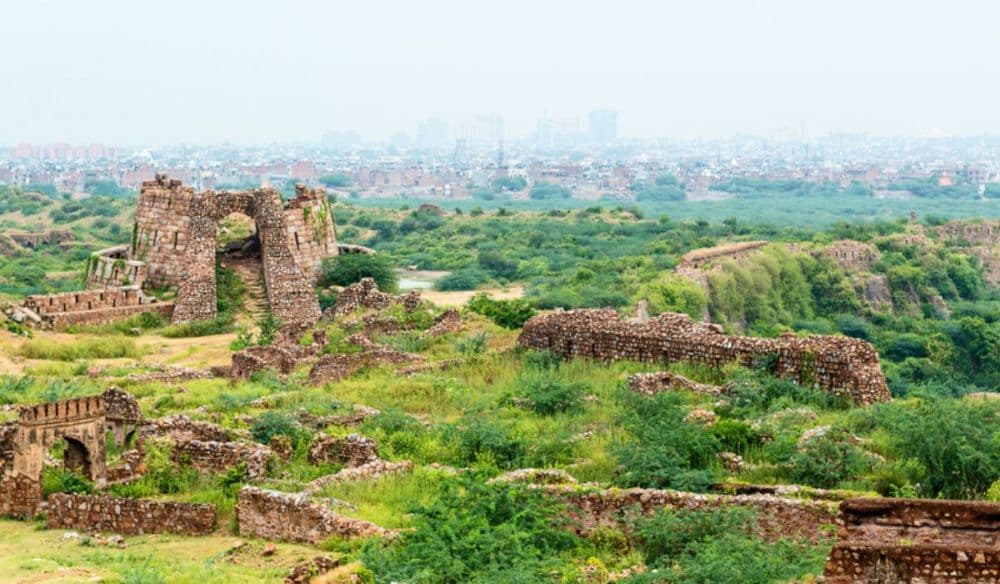
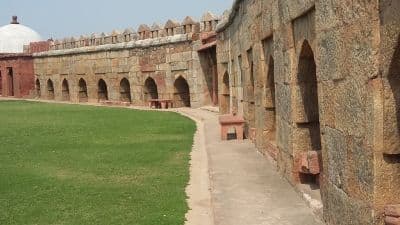
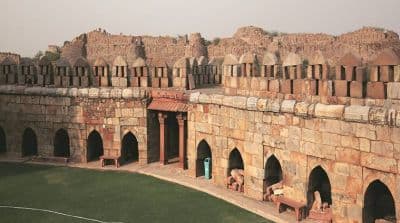
In 1320 CE, the first of the Tughlaq Sultans, Ghiyasuddin Tughlaq commissioned the building of a new fort that would be the seat of administration for him. Tughlaqabad, named after him, took four years to build, not a long time, actually, given that it’s so large: the reason being that the Tughlaqs were not especially keen on the sort of ornate decoration seen in (say) the Red Fort or Purana Qila. Tughlaqabad was occupied only briefly, and then abandoned, which is why it is now almost completely in ruins. There are some half-collapsed bastions to be seen, as well as occasional arches, but most of the buildings are now gone. From the main gate, if you turn right, you can walk past a three-arched mosque that was once the private mosque for the royal family; and a market place, appearing today as a tunnel pierced here and there by overhead inlets. Beyond is a high bastion to which you can climb for a fine view across the nearby areas, as well as a view of Ghiyasuddin Tughlaq’s white-domed tomb, across the road. If you go left from the main gate, you walk past a façade of arched walls, to the baoli (step-well) beyond, still in good condition. Because Tughlaqabad is in ruins, it’s also quite wild. There are lots of monkeys, of course (carry a stick, to be on the safe side), and we even saw a neelgai. Plus, lots of birds and butterflies. Tickets are Rs 20 for Indians (if you’re paying digitally; Rs 25 if you pay cash), Rs 250 (digitally, and 300 if cash) for foreigners. Children below 15 years of age can enter free of charge.
Mushtaq-Pahalgami
★★★★★5.0Wrote on 22 Feb 2023
I visited this fort in recently in February 2023. It is in the care of Archeological Survey of India. Entry fee is Rs 25
I visited this fort in recently in February 2023. It is in the care of Archeological Survey of India. Entry fee is Rs 25 for Indians, , includes both the fort and Ghiyasuddin Tughlaq tomb. The fort is majestic and covers a huge area maybe half of which is demolished and now covered in forests and residential housing. It is surrounded by a now dried up moat. The outer walls are quite thick. There are a lot of monkeys in the complex. There are also cows that are brought for grazing by the villagers. But i saw the monkeys bother and harass visitors inside the complex and i suggest the authority they should take steps to keep the monkeys away from the site . Opposite the fort is the Ghiyasuddin Tughlaq tomb, formerly part of the same complex but now separated by a road. It is one of the sute of other important sites of Delhi and therefore people interested in architecture and history should come and visit the site . The ASI should take special care of this monument ,there needs urgent renovation and beautification work in the fort as well as the landscape should be maintain. Thank you Best Regards Mushtaq Pahalgami Social Environmental Activist Travel Consultant from Pahalgam Jammu and Kashmir.
JoyBoseRoy
★★★★4.0Wrote on 29 Oct 2020
A majestic fort, must see but mostly in ruins
I visited this fort in October 2020. Ticketing was via mobile app only due to Covid restrictions. It is in the care of Archeological Survey of India. Entry fee is Rs 20 for Indians, 250 for foreigners, includes both the fort and Ghiyasuddin Tughlaq tomb. There is car parking outside. The fort is majestic and covers a huge area of maybe 5-6 sq km, maybe half of which is demolished and now covered in forests and residential housing. It is surrounded by a now dried up moat. The outer walls are quite thick. Still, the walls are majestic and the remaining buildings do give an idea of the huge fort. There are a number of buildings at higher and lower levels, including residential areas, kitchen, prisons etc. From one of the higher points in the fort, one can see the entire surrounding countryside. There are a lot of monkeys in the complex. There are also cows that are brought for grazing by the villagers. But they dont bother humans anyway. Opposite the fort is the Ghiyasuddin Tughlaq tomb, formerly part of the same complex but now separated by a road. It is one of the 7 cities of Delhi and therefore a must see for people interested in architecture and history.
christiansH8593HE
★★★★★5.0Wrote on 6 Mar 2020
Tughlaqabad Fort
Driving past the ruins of once grandiose structure known as Tughlaqabad Fort, we decided to take a closer look. Upon entering we realized the actual spread of the property, it was massive but falling apart in most places. One can imagine, during its hay days this fort must have been a marvel of sorts, be it the architecture or the raw materials used, it has withstood the test of time since the 14th century. A little unsafe though, as other patrons seemed locals, who kept a steady eye on our movement. Intimidated, we decided to cut short our venture and recede back to the parking. If you're in a group, then a must visit, since it's not everyday one gets to see a fort or the ruins of it.
ghoomboom
★★★★4.0Wrote on 2 Feb 2020
A Ruined City of Medieval Times
The ruins of the fort tell that the fort actually must have been a city in itself about 700 years back.In fact, 3rd of the 7 cities that Delhi is built around. Big area with ruined rubble masonry structures that will be much more interesting if you connect them with historical stories. Built by Ghiyasuddin Tughlak, founder of Tughlak dynasty in India around 1321, the city was not inhabited for long and was abandoned only after few years. There is a straight causeway to his tomb just across the Mehrauli-Badarpur road. Do wear a good sturdy pair of shoes as you would be walking on rough, uneven, stoney path with thorns that can hurt you. Better to buy online tickets as many times, the tickets would not be issued on the counter. Many local people come here just to enjoy, take selfies and have picnic sort of. But if you are a lover of archaeological sites and history buff, its a must visit site for you in Delhi. The only disappointment to you would be that Archaeological Survey of India has not done anything to educate you by placing information boards/placards at various sites. Sure they have placed one giving the layout of the Fort just at the entrance but its not of much help and difficult to correlate with the actual sites.